Another thing he sorely misses is the institution of the storyteller, once an integral part of valley life.
"The storyteller would regularly come to our home in the evening. All the village children would assemble in a room as the storyteller started his narrative of princes and fairies and the wooden horse that would fly carrying the prince charming to the far off land where he fought the demon to retrieve his lady love.
"Hot 'kehwa' with saffron to keep the story teller and the listeners awake during the long winter nights was a ritual I still remember vividly," Sheikh said, ruing the end of the charming tradition. - From 'Kashmir: Where have all the icicles and storytellers gone?'
http://lifestyle.in.msn.com/travel/article.aspx?cp-documentid=4817985&page=2
Thursday, January 20, 2011


Sunday, January 16, 2011
Simplifying to the extreme, I define postmodern as incredulity toward metanarratives. This incredulity is undoubtedly a product of progress in the sciences: but that progress in turn presupposes it[...]The narrative function is losing its functors, its great hero, its great dangers, its great voyages, its great goal. It is being dispersed in clouds of narrative language elements—narrative, but also denotative, prescriptive, descriptive, and so on [...] Where, after the metanarratives, can legitimacy reside?
—Jean-François Lyotard
—Jean-François Lyotard
Saturday, January 15, 2011

Goddess figures and feminine imagery appear in many of the world's religious traditions, but often such goddesses have fallen into eclipse and such imagery has become peripheral or subordinate to the masculine metaphors of the divine. This was not the fate of the feminine in India. From one standpoint, the history of the Hindu tradition can be characterised as a re-emergence of the feminine.
- C. Mackenzie Brown in 'The Triumph of the Goddess'.
Tuesday, December 28, 2010

Sunday, December 12, 2010
"The very best in thought, the very best in action, the very best in character, the very best in literature and art, the very best in religion and all the world well lost if only this very best might be attained, such was the spirit of ancient India. He (the Indian) saw Harischandra give up all that life held precious and dear rather than that his lips should utter a lie or his plighted word be broken. He saw Prahlada buried under mountains, whelmed in the seas, tortured by the poison of a thousand venomous serpents, yet calmly true to his faith. He saw Buddha give up his royal state, wealth, luxury, wife, child and parents so that mankind might be saved. He saw Shivi hew the flesh from his own limbs to save one small dove from the pursuing falcon, Karna tear his own body with a smile for the joy of making a gift, Duryodhan refuse to yield one inch of earth without noble resistance and warlike struggle. He saw Sita face exile, hardship, privation and danger in the eagerness of wifely love and duty, Savitri rescue by her devotion her husband back from the visible grip of death. These were the classical Indian types." - Sri Aurobindo
Friday, November 12, 2010
The Indian oral tradition
Until the nineteenth century, when the practice of printing and distributing literary pieces became feasible and possible, literature in India existed mainly in the oral tradition. Even when literary pieces were circulated in the manuscript form, the general dissemination of any literary work depended on its oral outreach. This includes a range of narrations from scriptures to folksongs, stories, aphorisms and drama.
Source: http://sahitya-akademi.gov.in/sahitya-akademi/projects-schemes/tribal_oral_literature.jsp
Source: http://sahitya-akademi.gov.in/sahitya-akademi/projects-schemes/tribal_oral_literature.jsp
Saturday, November 6, 2010
The healing powers of the 'Tale of the Four Dervishes'
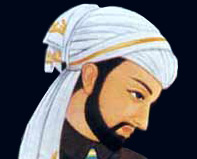
The Tale of the Four Dervishes (Ghasseh-e Chahar Dervish, Persian) is a collection of allegorical stories in Persian composed by Amir Khusro, a Sufi mystic, musician, scholar and poet in the late 13th century. The reading or listening to the collection is supposed to have healing powers.
Amina Shah has retold these tales. This is what she writes in her introduction:
“When the great 13th Century Sufi teacher Nizamuddin Awliya was ill, his disciple Amir Khusraw – the eminent Persian poet – recited to him this Sufi allegory. To mark this event, Nizamuddin on his recovery, placed this benediction upon the book:
‘Who hears this story will, by the divine power, be in health’.
“Mir Amman of Delhi translated the work a century and a half ago into Urdu, and ever since it has been regarded as a classic of that language, under the title of ‘Bagh o Bahar’ (Garden and Spring), a chronogram which, when decoded by the Abjad System, produces the date of its completion: Year 1217 of the Hijra Era”.
“It is widely believed that the recitation of the story will restore to health the ailing, and that the allegorical dimensions of the adventures of the Dervishes contained in it are part of a teaching-system which prepares the mind of the Seeker-after-Truth for spiritual enlightenment”.
Source: http://www.chishti.ru/chishti_books.htm
Subscribe to:
Posts (Atom)